Tuesday, July 31, 2012

'Miracle man' celebrates second chance after DART crash


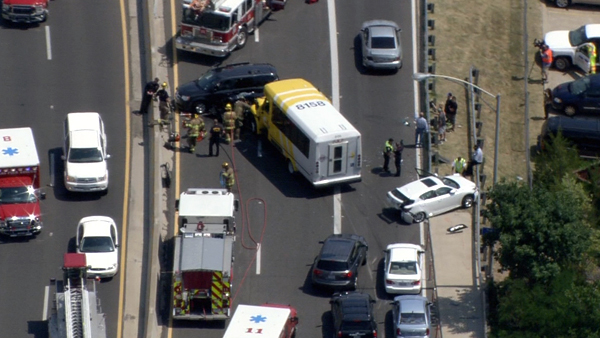
DALLAS — Jose Sepulveda sits on his porch, even with the temperature rising to more than 100 degrees. He can't stop admiring the view.

"I'm looking at everything," Sepulveda said. "I almost didn't get to see this again."

But seconds later, his feeling of serenity was shattered by the pain raging through his body.

The suffering and the scars on Sepulveda's body are reminders of the afternoon of June 29, when he decided to take the Dallas North Tollway home instead of North Central Expressway. He remembers sitting in traffic on the ramp to Interstate 35, checking his rear view mirror.

He remembers seeing trouble — a DART paratransit van was heading toward his car without any sign of stopping.

"I remember seeing him 10 feet away. It was the worst feeling," Sepulveda said. "I remember I held on to the steering wheel and I just closed my eyes."

When the father and husband woke up, he found his car's rear license plate by his elbow. The car was destroyed. The steering wheel impaled his chest and the back seat crushed his right shoulder and hip.

Firefighters pried open the car to pull him out.

"I remember when they were cutting the car, I was thinking, 'Is this it?' I was gasping for air. I thought my life was over," Sepulveda recalled.

He spent more than three weeks in the hospital. In therapy, he doubled up on exercises. He did everything he could to get better so he can go home to his wife and two children.

His family motivated him at every step. Nurses called him the "miracle man."

"It hurt me real bad, but I'm lucky I'm breathing," Sepulveda said. "I'm lucky that I'm here to see everybody — my wife, my kids, my mom. I'm lucky that I'm alive."

He feels blessed to be home, telling News 8 his entire family is his main source of strength.

For Sepulveda's wife Pollieanna — who is a nurse — the hardest part is seeing her husband in pain, but she's grateful that he survived.

"I just thank God he's alive and that he's here with us," she said. "It's a long road, but we are going to make it together as a family. We have a lot of support."

Sepulveda still needs more surgery and months of occupational, physical, speech, and cognitive therapy. He's determined to give it his all, because he wants to accomplish one goal.

"It hard to see my kids and not be able to pick them up, you know, or hug them because I can't turn around and hug them," he said. "That's what I want to be able to do."

The preliminary crash investigation found that there was no evidence of drugs, alcohol or cell phone use, but it did reveal that the DART driver failed to control his speed and failed to pay attention.

The family has hired Dallas attorney Robert Crain, but no lawsuits have been filed.

Sepulveda is keen to remain focused on his recovery; he doesn't want to dwell on that terrifying afternoon on the tollway one month ago.

"It doesn't serve a purpose to be angry at anyone," he said. "I mean, I got a second chance... I got a second chance at life."

____________________
source: WFAA (Diaz, 7/30)


If you, or a loved one, has been injured in an accident, The Cole Legal Group can help! Contact us for a FREE CONSULTATION. We are eager to help.

Friday, July 27, 2012

Michelin recalls 841,000 BFGoodrich and Uniroyal light commercial tires for tread separation

Michelin voluntarily recalled around 841,000 BFGoodrich and Uniroyal tires Thursday because the tread can separate, causing rapid air loss.

No deaths or injuries have been reported from the tires, which were made as replacement tires for commercial light trucks and full-sized heavy duty vans from April 2010 until early this year, according to the company.

Michelin North America Inc., based in Greenville, S.C., is beginning the recall immediately. Tires will be replaced at no charge. Websites and toll-free numbers have been set up with more information.

Quality-control workers started noticing an increase in reported problems with the tires this year. The company has noticed the separation in less than 150 tires, but decided the voluntary recall was needed to protect the safety of drivers, said Michelin’s technical director, Mike Wischhusen.

“We constantly monitor our products performance in the field and it was our own internal quality systems that caught this issue,” Wischhusen said. “We caught it very early, based on a very small number of returns.”

Michelin’s internal testing shows the problems with the tires have apparently been corrected for those manufactured more recently, Wischhusen said. “A tire is a complex thing. There is rarely one thing you can pinpoint to cause something like this,” he said.

The tires being recalled were BFGoodrich commercial tires LT 235/85 and LT245/75 and Uniroyal Laredo tires LT 235/85 and LT245/75. Michelin said anyone looking for more information can call 800-637-5527 or visit www.bfgoodrichtires.com/voluntarysafetyrecall or www.uniroyaltires.com/voluntarysafetyrecall .

“We’re taking this proactive action in order to protect our consumers and the driving public,” Wischhusen said.

____________________
source: Washington Post (AP, 7/26)

Thursday, July 12, 2012

Big 18-Wheeler Pileup Snarls I-35 Traffic For Hours In Central Texas


WACO — Traffic was beginning to flow again late Wednesday afternoon on southbound Interstate 35 in Waco after a big pileup involving three 18-wheelers that snarled traffic for several hours.

The crash at around 1:30 p.m. just south of South 18th Street backed up traffic into the Bellmead area.

One of the trucks was leaking diesel fuel and a hazardous materials team had to be called in to contain and clean up the spill.

One of the trucks ended up against a guardrail, which kept it from toppling from the bridge.

Waco police urged motorists to find an alternate route while crews worked to clear the scene.

Two truck drivers were taken by ambulance to a local hospital complaining of back and injuries.

The third driver did not require medical attention.

Rain was falling and the highway was slick at the time of the chain-reaction crash, which police say happened when an 18-wheeler in the outside lane hydroplaned, struck the median barrier and veered to the right, colliding with a truck in the center lane.

The two trucks then slid into a third 18-wheeler, which hit the guardrail on the far right side of the highway.

____________________
source: KWTX (7/11)

Friday, July 6, 2012

Agency charged with investigating state hospital complaints says 'no thanks' to 36 percent of them

When public psychiatric hospital patients say they've been abused, neglected or exploited, they turn to the Department of Family and Protective Services for help.

But the agency charged with protecting some of the state's most vulnerable patients routinely declines to investigate complaints that come from the 10 publicly funded hospitals that house people with serious mental illnesses. In fiscal year 2011, Family and Protective Services kicked back 36 percent of the complaints it received to the very facilities accused of wrongdoing in the first place: the hospitals.

Agency officials say those cases involved medical care, patient rights or hospital policies — all areas they don't investigate. Instead, they focus on cases that they believe meet the definition of abuse, neglect or exploitation. But mental health advocates say the department is abdicating its responsibility, miscategorizing cases and punting too many complaints that it should scrutinize.

"I think this is endemic of state agencies, frankly," said Jim Harrington with the Texas Civil Rights Project, a nonprofit foundation that promotes civil rights and economic and racial justice. "I think they just don't deal with the complaints that come in. They don't take it seriously. Part of it is that they're underfunded, but part of it is the culture."

Family and Protective Services spokeswoman Julie Moody says the agency is simply following the law.

"Of course, we care, and it is ridiculous to assert otherwise. Our investigators work extremely hard, and many of them have chosen this very difficult work as a career because they want to help people in need. But we can't do more than the law and our rules allow us to do."

Protecting patients

Advocates are concerned not only about the number of complaints that are being rejected, but also the types.

Last month, Family and Protective Services declined to investigate whether a doctor exploited patients after he videotaped them without permission and then made a DVD that he gave to a for-profit company. It also passed on reviewing allegations that a Rusk State Hospital employee sold drugs to a patient, a decision it reversed after the Austin American-Statesman raised questions about the issue.

When Family and Protective Services rejects a case, other agencies — such as the Health and Human Services Commission's Office of Inspector General and the Texas Medical Board — can investigate.

But often, their roles are specialized. The Office of Inspector General looks for crimes and violations of state work rules. The Texas Medical Board scrutinizes only doctors.

Family and Protective Services plays a broader role in protecting patients. The agency regularly works with law enforcement and reports confirmed allegations to professional licensing boards. It scrutinizes the behavior of all employees, not just licensed professionals.

It also directly influences who can work at the psychiatric hospitals. Staffers found to have abused, neglected or exploited patients can be disciplined or fired. They can also be placed on the state's employee misconduct registry, thus becoming ineligible for future employment with the agency.

And while other agencies can investigate, they often don't. The Texas Medical Board, for example, investigated about one-quarter of the 8,100 complaints it received in fiscal year 2011 about doctors across the state.

When other agencies decline to take a case, the task of investigating falls solely to the hospitals and the Department of State Health Services, which oversees the hospitals.

The agency looks into every rights complaint it receives, said State Health Services spokeswoman Carrie Williams. Hospital doctors review patient complaints about medical care, as does the state medical director over the facilities.

Advocates say that hospitals can't investigate themselves objectively. Williams says staffers are professional and committed to good medical care.

Weighing complaints

Family and Protective Services investigates complaints from a wide range of facilities: psychiatric hospitals, foster care homes, living centers for people with intellectual disabilities. The Statesman is focusing on the hospitals as part of its ongoing coverage of state psychiatric care.

Each year, patients and staffers call in thousands of complaints about hospital care. Family and Protective Services investigates those that meet the agency's definitions of abuse, neglect or exploitation. Examples might include reports of physical or sexual abuse or of leaving suicidal patients unattended. The department, for example, investigated the case of former Austin State Hospital psychiatrist Charles Fischer, who was recently indicted on charges that he sexually abused five boys in his care.

The agency declines to investigate cases they deem to be medical, policy or rights matters, such as patients not being allowed to use the telephone, medication mistakes or staffing problems. Those complaints are referred back to the hospitals for their own review. The referrals are permitted under state policy, which was developed in conjunction with State Health Services and other groups that agreed that Family and Protective Services investigators didn't have the expertise to sort through such issues.

But mental health advocates say they're surprised at how many cases Family and Protective Services is declining to investigate.

Between Sept. 1, 2010, and Aug. 31, 2011, Family and Protective Services received 3,984 complaints from the 10 state hospitals. Of those, 1,434, or 36 percent, were kicked back to the hospitals.

"That seems quite a high number," said Beth Mitchell, a lawyer with the advocacy group Disability Rights Texas. "It would be interesting to try to determine how many of them should have been kept."

By comparison, during that same time period, the agency declined to investigate 22 percent of the approximately 9,000 complaints it received from the 13 state supported living centers. Those institutions house people with intellectual disabilities.

Moody said she did not have information on why Family and Protective Services rejected a higher percentage of allegations from the hospitals.

"We just don't know why the numbers are the way they are," she said.

Revisiting cases

Several recent cases that Family and Protective Services passed over have raised red flags for mental health advocates.

In March, a patient at Rusk State Hospital in East Texas overdosed on 30 Vicodin he said he bought from an employee once found to have drugs and a gun in his car on campus. Family and Protective Services initially declined to investigate, saying it didn't count as abuse, neglect or exploitation. Officials later changed their minds, and the allegation is under review.

Rusk did its own investigation and found no evidence of wrongdoing by the employee.

Staffers at State Health Services determined that the patient's rights had not been violated. The Office of Inspector General investigated and found no criminal violations.

Meanwhile, Family and Protective Services has declined to look into the case of Dr. Allen Childs, a former North Texas State Hospital psychiatrist accused of videorecording patients without permission and then using that footage to make a DVD promoting an electrical device made by a company he later worked for.

The case does not count as exploitation, Moody said, because the doctor is not accused of misusing a patient's financial resources.

Mitchell disagreed with that decision, saying that the state's definition of exploitation includes using a patient for personal gain and that the doctor appeared to have done that.

"That one still seems crazy to me," Mitchell said of the agency's decision not to investigate.

The case is now being reviewed by the hospital and the Department of State Health Services.


____________________
source: Statesman (Ball, 6/30)

Friday, June 29, 2012

When is the most dangerous time to drive?

Texas weather is completely unpredictable, and we have some of the craziest drivers in the urban areas, but also some of the most courteous drivers in the rural areas. But the question is this: when is the most dangerous time to drive?

According to the National Highway Traffic Safety Administration, August is the most dangerous month of the year to drive in, and it turns out, statistically speaking, that Saturday is the most dangerous day to drive. But why is that true?

Some might argue that winter is the most dangerous due to snowfall and icy roads, which often means dangerous road conditions. But sometimes people don't really think about how drivers react to these condition. It turns out most people actually stay indoors and off the roads, and those who do go out for a drive, tend to drive slower under inclement weather.

To where in summer, kids are out of school and people travel. Speed is the single greatest factor to serious car accidents, not so much because of the violation of the posted speed limits but because drivers ignore the weather conditions that call for a lower speed. Car accidents are the number 1 cause of death for people in the ages of 1 and 34. Auto accidents kill more than 40,000 people in the U.S. every year.

In looking at the last 5 years of statistics for traffic fatalities of all vehicle types, the third quarter (July-September) tops numbers for all other quarters for number of vehicular accidents, but in general spring and summer months (2nd and 3rd quarters) are when more accidents occur than in fall and winter months (1st and 4th quarters).

On average, the spring and summer months have 11.3% more fatalities per year than the fall and winter months. The 3rd quarter alone is 5.25% higher than the 2nd quarter (Apr-Jun), 6.64% higher than the 4th quarter (Oct-Dec), but 23% higher than the 1st quarter (Jan-Mar)! So, in opposition to what most people think as the season with the most difficult driving conditions turns out to have the fewest number of fatalities.

Wednesday, June 20, 2012

Simulator shows young drivers the risks of distraction


One of the most persistent challenges for teen-driving safety advocates is getting novice drivers to understand that their actions behind the wheel can have far-reaching implications.

Several advocacy groups around the USA are turning to a driving simulation program that focuses on the long-term consequences of distracted and drunken driving.

One Simple Decision, created by Virtual Driver Interactive Inc. (VDI), one of the nation's largest driving simulator manufacturers, seeks to modify driver behavior by showing drivers what can happen if they have a crash while driving under the influence or texting while driving. It combines simulated driving and interactions with police, judges and emergency medical personnel in an intense, 20-minute experience featuring a real judge, actual sheriff's deputies and EMTs.

[Contact Cole Legal Group if you've been involved in a car accident in Texas]

Harry Mochel, now 19, of Rye, N.Y., experienced One Simple Decison about a year ago at a private driver's education school in Rye. "I'd been driving for a little while already," he says. "My parents had heard about it and said you should try it."

He says he was "driving" along on the simulator. "It tells you to start texting, so I took out my phone and started texting," he says. "I ended up crashing into a stop sign and got into a head-on collision. It's crazy to see how easy it was."

Just like real life, though, that was just the beginning of his troubles. "The real powerful part was that as soon as you got into the crash, the scene changes from the driving simulation scene to actual video footage of a cop walking up to you," says Mochel, now a freshman at Tulane University in New Orleans. "As he comes up, he shines a light in your face and says, 'Have you been drinking?'

"Then you have the police booking you into jail, and the court," Mochel says. "It puts everything in perspective and makes it really realistic."

The Ohio Department of Transportation paid $42,000 for four VDI simulators and uses the One Simple Decision program at events such as school days, football games and county fairs around the state, spokeswoman Melissa Ayers says.

"We recognized that there is an issue, especially among young drivers, with paying attention to the road," she says. "We started using it last year. We've gotten really good feedback. The kids realize after they've used it, 'I really can't do two things at once (while driving).' "

The program is catching on just as the federal government documents how widespread distracted driving is among the nation's youth and renews its push to curb it. Earlier this month, Transportation Secretary Ray LaHood intensified his 3½-year fight against distracted driving, which he says accounts for about one in 10 road fatalities — 3,092 deaths in 2010.

The Centers for Disease Control and Prevention also released the first-ever federal statistics on how widespread distracted driving is among the nation's youth. The CDC's 2011 anonymous national survey of more than 15,000 high school students found that 58% of high school seniors admitted to texting or e-mailing while driving during the previous month.

Bob Davis, the CEO and founder of Virtual Driver Interactive, says he created the One Simple Decision program after his research found that many teen drivers misunderstood the potential impact of their behavior while driving.

"I asked, 'What's the downside of texting while driving?' " Davis says. "They said, I know it's like a $25 ticket, which is not that much money. They interpreted the law as the downside was a $25 ticket. … The (simulation) experience for the kids has to be a personal one to make it really effective."

VDI's surveys found that 86% of teens and young adults who had experienced One Simple Decision said they would rarely or never drive distracted in the future; 71% said the consequences of bad choices behind the wheel were worse or much worse than they first thought, the company says.

Toyota and Discovery Education use the software for their joint teen driving-safety program, Toyota Teen Driver. "I believe in it. I really do," says Kelly Fisher, Toyota's assistant manager for national philanthropy.

John Robert Elliott, 15, of Mouton, Ala., used the program during the just-ended school year at Lawrence County High School. "It helped me prepare to be on the road," says John Robert, who has his learner's permit. "It makes you think about what you do while you're driving."

____________________
source: USA Today (Copeland, 6/19)

Wednesday, June 13, 2012

Chrysler expands Jeep Liberty recall


The Associated Press is reporting that Chrysler has added more than 137,000 Jeep Liberty SUVs to a March safety recall, bringing the total number of vehicles affected to nearly 347,000.

The National Highway Traffic Safety Administration said lower-control arms in the rear suspension can rust and break, possibly causing the vehicles to crash. However, the company says it knows of no crashes or injuries from the problem. The recall involves vehicles in states where salt is used to clear ice and snow from the roads, including those sold or registered in: Connecticut, Delaware, Illinois, Indiana, Iowa, Maine, Maryland, Massachusetts, Michigan, Minnesota, Missouri, New Hampshire, New Jersey, New York, Ohio, Pennsylvania, Rhode Island, Vermont, West Virginia, Wisconsin and Washington, D.C.

[Involved in a car crash due to a manufacturer's defect? Contact the Cole Legal Group]

Chrysler said Monday that it will inspect the parts and replace them free if needed.

In March, the company said it was recalling about 200,000 Libertys from the 2004 and 2005 model years for the problem. Now it has added the 2006 and 2007 model years.

Vehicles covered by the recall were built from July 3, 2003, through June 29, 2007.

The company told NHTSA that as of February it had received no complaints about Liberty control arms from the 2006 or 2007 model years. But since April it has received eight reports of the problem, all from salt-belt states.

The company plans to notify owners of affected vehicles by the end of June. Customers with questions can call Chrysler at 800-853-1403.

__________________
source: USA Today (AP, 6/11)