Showing posts with label Texas Personal Injury Lawyer. Show all posts

Monday, August 6, 2012

Hyundai Jumps Ahead of Settlement With Latest Recall

The move by Hyundai over the weekend to recall about 200,000 of its 2007-9 Santa Fe crossovers for an air bag problem stemmed from an unlikely source: the proposed settlement of a lawsuit seeking class-action status.

As part of the settlement, owners will have an unusual fallback, if a federal judge approves it: Hyundai will buy the vehicles back if they cannot be fixed, Robert B. Carey, a Phoenix lawyer who filed the suit, said in an interview.

Since 2006, Hyundai has recalled almost 1.3 million vehicles for air bag malfunctions, but this is the first time it has done so as a result of a settlement, a spokesman, Jim Trainor, wrote in an e-mail.

The settlement is to be filed in the United States District Court Central District of California by Aug. 17. Mr. Trainor declined to comment on the settlement, saying it would be inappropriate because the judge had yet to approve it.

However, Mr. Trainor said, regardless of whether the judge approved the settlement, the Santa Fe models will be recalled.

Hyundai says it will fix a software flaw that could result in the front passenger air bag being turned off if a person of “small stature” is seated there.

The defect could increase the chance of injury in a frontal crash, Hyundai said in a report (PDF) to the National Highway Traffic Safety Administration on its Web site.

The issue is the so-called advanced air bag system required by the federal government since 2006.

The systems are designed to minimize the chance of a person being injured by an air bag. Sensors detect the severity of the crash, the seating position and the occupant’s size. A computer adjusts the force with which the air bag deploys depending on the input.

In addition, if a small child were seated there, which safety experts discourage, a warning light would say the passenger air bag was deactivated.

The thrust of the suit filed in 2009 is the assertion that some Hyundai advanced air bag systems were defective and turned off the passenger air bag when a person weighing as much as 120 pounds was seated.

Two of the named plaintiffs are a couple from Ohio who own a 2006 Sonata. The wife weighs “less than 120 pounds,” according to the suit.

The two others are a Texas couple whose 117-pound daughter’s head hit the windshield in a frontal crash. The suit says the injury occurred because the air bag did not deploy. Mr. Carey said she was wearing a seat belt.

However, the suit also asked to represent “all persons who currently own or lease a 2006–9 Hyundai vehicles with an occupant classification system in the front passenger seat.”

It says those vehicles include, but are not limited to, the Sonata, Tucson, Tiburon, Santa Fe, Elantra, Accent and Azera.

According to Mr. Carey, the lawyer representing the plaintiffs, the suit was never certified. The lawyer added that the parties went directly into settlement discussions.

In an interview, Mr. Carey said he wanted the Sante Fe crossovers fixed, but it was Hyundai’s idea to do so with a recall through N.H.T.S.A.

Mr. Carey said the details of the buyback would be included when the proposed settlement was filed.

While the complaint asserted virtually all Hyundai models from 2006–9 had defective air bag systems, only the Santa Fes were being recalled as a result of the pending settlement.

In an e-mail, Mr. Carey wrote that as the case progressed “more robust data” were available and “further information indicated that some of those cars did not have a problem.”

Mr. Carey said he believed “the settlement addresses all vehicles with a problem.”

____________________
Source: The New York Times (Jensen, 7/30)

Tuesday, July 31, 2012

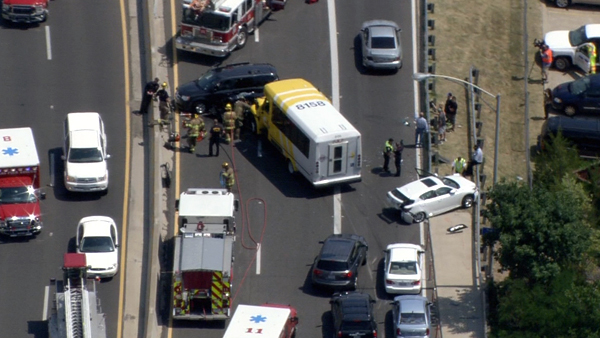
'Miracle man' celebrates second chance after DART crash


DALLAS — Jose Sepulveda sits on his porch, even with the temperature rising to more than 100 degrees. He can't stop admiring the view.

"I'm looking at everything," Sepulveda said. "I almost didn't get to see this again."

But seconds later, his feeling of serenity was shattered by the pain raging through his body.

The suffering and the scars on Sepulveda's body are reminders of the afternoon of June 29, when he decided to take the Dallas North Tollway home instead of North Central Expressway. He remembers sitting in traffic on the ramp to Interstate 35, checking his rear view mirror.

He remembers seeing trouble — a DART paratransit van was heading toward his car without any sign of stopping.

"I remember seeing him 10 feet away. It was the worst feeling," Sepulveda said. "I remember I held on to the steering wheel and I just closed my eyes."

When the father and husband woke up, he found his car's rear license plate by his elbow. The car was destroyed. The steering wheel impaled his chest and the back seat crushed his right shoulder and hip.

Firefighters pried open the car to pull him out.

"I remember when they were cutting the car, I was thinking, 'Is this it?' I was gasping for air. I thought my life was over," Sepulveda recalled.

He spent more than three weeks in the hospital. In therapy, he doubled up on exercises. He did everything he could to get better so he can go home to his wife and two children.

His family motivated him at every step. Nurses called him the "miracle man."

"It hurt me real bad, but I'm lucky I'm breathing," Sepulveda said. "I'm lucky that I'm here to see everybody — my wife, my kids, my mom. I'm lucky that I'm alive."

He feels blessed to be home, telling News 8 his entire family is his main source of strength.

For Sepulveda's wife Pollieanna — who is a nurse — the hardest part is seeing her husband in pain, but she's grateful that he survived.

"I just thank God he's alive and that he's here with us," she said. "It's a long road, but we are going to make it together as a family. We have a lot of support."

Sepulveda still needs more surgery and months of occupational, physical, speech, and cognitive therapy. He's determined to give it his all, because he wants to accomplish one goal.

"It hard to see my kids and not be able to pick them up, you know, or hug them because I can't turn around and hug them," he said. "That's what I want to be able to do."

The preliminary crash investigation found that there was no evidence of drugs, alcohol or cell phone use, but it did reveal that the DART driver failed to control his speed and failed to pay attention.

The family has hired Dallas attorney Robert Crain, but no lawsuits have been filed.

Sepulveda is keen to remain focused on his recovery; he doesn't want to dwell on that terrifying afternoon on the tollway one month ago.

"It doesn't serve a purpose to be angry at anyone," he said. "I mean, I got a second chance... I got a second chance at life."

____________________
source: WFAA (Diaz, 7/30)


If you, or a loved one, has been injured in an accident, The Cole Legal Group can help! Contact us for a FREE CONSULTATION. We are eager to help.

Friday, July 27, 2012

Michelin recalls 841,000 BFGoodrich and Uniroyal light commercial tires for tread separation

Michelin voluntarily recalled around 841,000 BFGoodrich and Uniroyal tires Thursday because the tread can separate, causing rapid air loss.

No deaths or injuries have been reported from the tires, which were made as replacement tires for commercial light trucks and full-sized heavy duty vans from April 2010 until early this year, according to the company.

Michelin North America Inc., based in Greenville, S.C., is beginning the recall immediately. Tires will be replaced at no charge. Websites and toll-free numbers have been set up with more information.

Quality-control workers started noticing an increase in reported problems with the tires this year. The company has noticed the separation in less than 150 tires, but decided the voluntary recall was needed to protect the safety of drivers, said Michelin’s technical director, Mike Wischhusen.

“We constantly monitor our products performance in the field and it was our own internal quality systems that caught this issue,” Wischhusen said. “We caught it very early, based on a very small number of returns.”

Michelin’s internal testing shows the problems with the tires have apparently been corrected for those manufactured more recently, Wischhusen said. “A tire is a complex thing. There is rarely one thing you can pinpoint to cause something like this,” he said.

The tires being recalled were BFGoodrich commercial tires LT 235/85 and LT245/75 and Uniroyal Laredo tires LT 235/85 and LT245/75. Michelin said anyone looking for more information can call 800-637-5527 or visit www.bfgoodrichtires.com/voluntarysafetyrecall or www.uniroyaltires.com/voluntarysafetyrecall .

“We’re taking this proactive action in order to protect our consumers and the driving public,” Wischhusen said.

____________________
source: Washington Post (AP, 7/26)

Wednesday, May 2, 2012

City won't pay when poles crash on property

AUSTIN - Joyce Thompson had just been diagnosed with breast cancer and was receiving radiation treatments when her only method of transportation was destroyed.

A city light pole fell on her car while it was parked in her driveway.

"I had to get one of my kids to take me and wait for me, pick me up, take me back home, take me back for radiation," said Thompson, recalling her ordeal that was three years in the making. "And it's just been really hard."

Thompson and her family thought the city would take responsibility for the falling pole, which photographs show was clearly rotted at the core.

"We've been at this address 20-plus years," Thomson said. "And the whole time that we have been there, that pole has never been changed."

Her son Bryan added, "We thought they were going to take a good position and say to themselves, 'OK, let's do something right.' But nothing. Nothing but a 'Go away. Go buy another car. You're a little person,' and 'Get over it.'"

____________________________________________________________
By the numbers
  • 200,000 light poles are in place citywide
  • 1,700 complaints about street lights have been logged with the city of Austin since 2009
  • 144 of the complaints were for poles that had already fallen
  • 2,500 light poles were replaced around the city
____________________________________________________________


When the city officials made clear they would not take responsibility for the damage to Thompson's Buick Roadmaster, she and her family sought out attorneys Ifeoma Ibekwe and Holly Claghorn.

"This case, it's just a matter of right vs. wrong," said Ibekwe. "It pulls on your heartstrings, and it's just one we couldn't walk away from."

Ibekwe and Claghorn took the case to court, where the justice of the peace ruled that the city was not liable for the damage. The reason is because lawmakers, as part of the Texas Tort Claims Act, have said that cities are not liable for damage caused while performing certain government functions, such as providing lighting for safety.

The pole that fell on the Thompson's car was a light pole and had no utility lines attached to it.

Immune from liability

"They're saying, 'We're not going to touch that. That's not our area. We're immune from liability,'" said Ibekwe. "However, if it was a utility pole and not just a light pole, they would have paid for that.

"And we can't find a way to distinguish why it's OK for a utility poll to fall down and for them to receive compensation," she added. "And yet if it's a light pole -- same type of pole maintained by the city except it just provides lighting -- they call it safety and security."

Meghan Riley, an attorney for the city of Austin, said the city is only following the law and trying to protect taxpayers from frivolous lawsuits.

"Its a sympathetic situation, but it's something the Legislature has made a determination on," Riley said. "And so it's something that the city doesn't have a choice to determine.

"I'm really sorry for her situation," she added. "It's certainly unfortunate that it happened."

But the Thompsons are not the only victims of this kind of situation.

KXAN News uncovered seven cases since January 2009 where light poles have fallen and damaged someone's property. In each case, the city has denied responsibility.

In a case from December 2010, a couple was driving near the Arboreteum in North Austin when a metal light pole fell on their car. Photos of that pole show rust at the base.

The couple was told the city was not responsible.

What about inspections?

"The city has an inspection program for the light poles that run electric wires but not for the ones that have lighting on them. But if you're a citizen walking around the street and you see a light pole, that's a distinction that doesn't matter to you and if it falls on your car it doesn't matter what kind of wires were connected to it," said Claghorn.

The Thompson family and their attorneys want the city to do a better job of inspecting the poles, but that presents a challenge for the city.

"It's similar to the city sidewalk.  We have, however, many miles of sidewalks, and we can't possibly inspect them in an organized way to take care of all that, so we rely on the public to let us know when they see something," said Riley.

That's small comfort to Joyce Thompson and others who found themselves having to pay for damage that was caused by city equipment. Thompson was finally able to replace her car about a month ago, nearly three years after the city's pole fell on it.

"I just really want them to do their job," she said, "not, not just -- you know --  not do anything about it."

What can you do?

If you see a dangerous light poll, call 311, and advise the call-taker of the pole's location and condition

____________________
source:  KXAN (Wolfson, 5/1)

Wednesday, February 15, 2012

Chrysler Recalls Charger Police Cars

Chrysler Group LLC is recalling certain Dodge Charger police vehicles from the 2011 and 2012 model year to fix electrical problems that could lead to failure of their low-beam headlights or the loss of anti-lock braking.

In a document filed with the National Highway Traffic Safety Administration, the car maker said the possible headlight problem stems from overheating in the bulb harness connector. Overheating can also occur in a component called a power distribution module, which can result in the loss of anti-lock brake and electronic stability control functions.

Chrysler said it built the affected cars between July 5, 2010, and Dec. 20, 2011. The recall includes 9,688 vehicles. The company said it is not aware of any accidents or injuries resulting from the problems.

Under the recall Chrysler dealers will replace the headlamp jumper harnesses and relocate the anti-lock brake and electronic stability control fuse within the power distribution module. The service is free of charge. The recall is expected to begin next month. Customers can contact Chrysler at 800-853-1403.

_______________
source: Wall Street Journal Blog (Welsh, 2/13)

Monday, January 30, 2012

Roads not keeping up with county population (Texas Hwy 105)

Gunn's Mazda after accident on TX 105 East
Jackie Majors still clings to the memory of her son when she drives the two-lane stretch of Texas 105 East where he was killed in a head-on collision a few months ago.

She had recently reunited with her birth son, Jerry Gunn, 19, who had years before been adopted. The night of Sept. 3, 2011, Majors lost the son she had just found and become close to, and she nearly lost three other family members.

The family was celebrating the upcoming wedding of Major’s daughter. Her husband, daughter and sister-in-law were riding in a Mazda two-door sedan that Gunn was driving. They were on their way to Conroe to pick up Jackie Majors for dinner.

Krystal Partridge, Majors’ daughter, barely remembers the crash. She does recall they had pulled out of a gas station onto Texas 105 East, behind an 18-wheeler going about 35 mph. Gunn wanted to pass the truck, she said, because the speed limit is 55 mph.

Gunn veered over to the other lane and sped up to pass, but the truck began picking up speed and may not have noticed the car was trying to pass, Partridge said.

A car was approaching in the distance, and Gunn tried to slow down to get back over, but the truck was in his way, she said.

Their car hit the oncoming Toyota head-on.

Majors’ husband had severe head trauma, four broken bones in his back, three broken ribs and a sliced speen. He was on life support for three days.

Her sister-in-law sliced her face, broke her jaw, and broke nearly a dozen bones in both her hands.

Partridge broke four bones in her back, her left arm and right leg. She also broke both shinbones, which pierced through the skin, causing her to lose so much blood she had to be rushed to Conroe Regional Medical Center so she could be stabilized enough for transport to Memorial Hermann Hospital-Texas Medical Center in Houston.

Gunn died at the scene.

Her guilt over the accident still haunts Majors, she said, because the wreck happened as her family was on their way to pick her up. She doesn’t want to think about losing one of her children and nearly losing another in the same wreck.

What she does want, she said, is for Texas 105 East to be widened so vehicles can safely pass each other instead of being forced into dangerous situations.

“Something really needs to be done about that road,” she said, “because I don’t want anyone else to go through what I did.”

Rising population, failing roads

While fatal wrecks caused by drunk driving are on the decline here because of crackdowns such as no refusal programs, Montgomery County’s roads are the biggest reason the county is still the deadliest per capita in Texas, officials say.

Fatal crashes in Montgomery County have decreased slightly over the last five years, but its rapidly growing population has helped it retain its title of the deadliest county in Texas. And Texas 105 is Montgomery County’s deadliest road, topping the list for the highest reported location of fatal crashes in 2007, 2008, 2009 and 2011, and placing second in 2010 and third in 2006.

Interstate 45, Texas 242 and FM 1314 also were consistently among the top fatal crash sites since 2006.

The state’s 11th-largest county, Montgomery County’s fatality rate has decreased slightly as its population has gone up, with an average of 1.8 fatalities per 10,000 people in 2006. That year, there were 74 fatalities, and the population was 392,500, according to Texas Department of Transportation data.

In 2010, the rate was 1.5 deaths per 10,000 people, but the county’s population was up to slightly more than 455,000, according to the U.S. Census Bureau.

The county’s many rural roads can’t handle the traffic that comes with a fast-growing population, and they can’t be expanded quickly enough to keep up, Department of Public Safety Trooper Erik Burse said.

“We’re a rural area that’s growing and we’re competing with all these big cities,” Burse said.

Montgomery County is “still a dangerous county to drive in,” said Assistant District Attorney Warren Diepraam, chief of the Vehicular Crimes Division for the Montgomery County District Attorney’s Office. “We’re basically a rural county, with a rapidly growing population.

In 2010, rural areas accounted for 56 percent of fatal crash sites in Texas. The two biggest factors are speed and alcohol.

Road conditions, construction plans

The state has many two-lane roads with high speed limits and low ditches near them, and the funds allocated to improve the state’s roads are “not enough,” said Richard Brown, area engineer for the Texas Department of Transportation.

There has been increased work done on Texas 105 East in recent years, he said, with the addition of left-turn lanes, signals and “rumble strips” with $250,000 in changes made in 2011, Brown said.

More money is planned for continued progress on the state highway, with a projected $7 million for adding alternating passing lanes and more left- and right-turn lanes to the 19-mile stretch, he said.

TxDOT has received 13 complaints related to Texas 105 since November 2010, according to its tracking system. Of those, eight related to the need for more traffic light signals, stop signs, additional lanes and turn lanes.

Complete expansion of Texas 105 East from two to four lanes is a project that may be completed in the next decade. The cost could be more than $150 million because of the expense to buy property rights of way near the road, said Stuart Corder, TxDOT director of transportation operations.

Where things get tricky is in finding money, because there’s only so much that can pay for improvements and new construction, Corder said.

“We do small things with time we have and the money we have,” he said. “Texas is very fast growing, especially the areas around Houston, and so we’re working as hard as we can with the money we have.”

Monitoring crashes and responding to citizen concerns can help TxDOT improve what it can, he said.

Cut and Shoot Mayor J.D. Roberts has made safety on Texas 105 East a priority over the past 12 years he’s served on the City Council and as mayor. Roberts joined the Montgomery County Mobility Committee eight years ago with the mission to improve the highway that runs directly through Cut and Shoot.

The committee is an informational outlet for city and school officials to meet and discuss roadway safety concerns and suggest solutions to TxDOT. Many of those changes have focused on Texas 105 East for more than a decade, Roberts said.

Improvements to the road are “a complicated issue,” Roberts said. “We have a dangerous situation, as well as our traffic.”

Traffic is often at a standstill from 4-6 p.m. most days, and the roadway is still dangerous even with the added signals and turn lanes, he said. Before the turn lanes were added, it was “nearly impossible” to turn because of the high volume of traffic.

County roads receive $1 million to $1.5 million in maintenance from the $4 million allotted annually to the budgets of each of Montgomery County’s four commissioners. With about 500 miles of roads north of Texas 105 in Precinct 1, Commissioner Mike Meador said there’s not enough money for road construction.

Money allotted for roads goes to repaving and repairing, along with mowing and litter maintenance services. Commissioners try to stay on top of rough road conditions in their precincts and make repairs when possible.

The opportunity for more money to fund road improvements looks bleak. County voters rejected a $200 million road bond in November, and Meador said another road bond is “not likely” in coming years.

“Basically, our roads in Precinct 1 and in Montgomery County are safe,” he said. “I think they’re all pretty safe if you drive the speed limit.”

Funding improvements to existing roads statewide is an ongoing problem, said state Sen. Robert Nichols, R-Jacksonville, whose District 3 includes North and East Montgomery County. During his eight-year tenure on the Texas Transportation Commission that ended in 2005, he “paid a lot of attention to safety.”

Back then, about 60 percent of vehicle fatalities in the state were on two-lane rural roads.

“There’s a lot of traffic on those two-lane rural roads,” he said. “They’re dangerous.”

In addition to the Legislature using money from the state’s transportation fund for other projects, the main reason for diminished funding, Nichols said, is the decreasing amount generated by the fuel tax. With cars achieving greater fuel efficiency every year, Nichols said, there’s barely enough money to continue road maintenance.

He proposed a bill during the last session for a constitutional amendment that would use the vehicle sales tax to finance work on roads and bridges. The bill didn’t pass, but Nichols said he plans to bring it before the Legislature again.

About $2.8 billion is generated annually in Texas from vehicle sales tax. That funding goes into the state’s general budget, Nichols said, so allotting a portion to transportation is a start.

“I think the public always likes fees to go to the service,” he said. “Why not let those fees go to infrastructure? Without cars, we wouldn’t have roadways. Everybody knows that we have to solve this problem.”

The healing continues

Majors and her family continue to heal physically and emotionally from the devastating wreck. Her husband walks with a limp, and her sister-in-law may need rods in her hands to help them completely heal.

Krystal Partridge postponed her wedding for a few weeks but after six surgeries, she married her Marine husband before he deployed to Afghanistan, going down the aisle in a wheelchair

Partridge began physical therapy Wednesday, another step in her long healing process.

As for Majors, her anger over the crash has been “placed on hold,” she said, to oversee the healing of her three family members who survived.

She relives the accident and the loss of her son every day, she said.

“They all should have been dead. I should have lost everyone in that car accident,” she said. “I don’t ever want to forget, because then he disappears.

“I don’t want his death to be in vain.”


__________
source: The Courier of Montgomery County (Waugh, 1/28)

Tuesday, January 17, 2012

BMW recalling 89,000 Mini brand cars

Nearly 89,000 Mini brand cars, including the Mini Cooper line of vehicles, are being recalled in the U.S. because of faulty water pumps that can malfunction and potentially cause engine compartment fires.

The recall comes about three months after the National Highway Traffic Safety Administration opened a defects investigation, citing 12 reports of fires in the vehicles manufactured by BMW.

Five of the fires reportedly destroyed the cars, according to a NHTSA document. BMW said it is unaware of any injuries or accidents caused by pump malfunctions.

The vehicles being recalled include seven models of the Mini series, ranging in model years from 2007 to 2011. The company is recalling 235,535 worldwide, including 88,911 cars in the U.S.

"For us this is a pretty serious issue," BMW spokeswoman Nathalie Bauters said, noting that the company seldom issues full recalls.

Bauters said BMW will notify car owners by mail in February, and dealers will replace the water pumps free of charge.

The pump was designed to conduct heat away from the engine's turbocharger after the car is turned off. BMW, in a letter to NHTSA, said the pump's electronic circuit board can malfunction because of "certain design features" and in some cases overheat.

This can lead to the "smoldering of the water pump," BMW said. "It cannot be excluded that this may also lead to an engine compartment or vehicle fire."

Eric Noble, president of the CarLabs industry consulting firm in Orange, said BMW's reputation is unlikely to suffer much from the recall.

"I think this is relatively minor in terms of any impact it would have on Mini as a brand," Noble said.

"Mini buyers tend to love their Minis. This alone isn't going to change that."

___________
source: LA Times (Stevens, 1/17)

Friday, January 6, 2012

Family sues Johnson & Johnson, blaming Tylenol for son's death

PHILADELPHIA -- The little boy was 2 years old, and his name was River. On the night of July 22, 2010, he had a fever.

Mothers and fathers worry about little boys with fevers, so Katy Moore gave her son Very Berry Strawberry Children's Tylenol. Within 30 minutes, he was spitting up blood. By the next day, he was dead from liver failure.

In a lawsuit filed last month in Philadelphia Common Pleas Court, Daniel and Katy Moore of Ellensburg, Wash., southeast of Seattle, blame Tylenol's manufacturer, Johnson & Johnson Inc., and its McNeil Consumer Healthcare subsidiary, which has a plant and headquarters in Fort Washington, Pa. J&J officials including Chief Executive Officer Bill Weldon and other companies in the supply chain also are named as defendants.

McNeil's Fort Washington plant was closed in March 2010 after dozens of reports of manufacturing problems and warnings from the U.S. Food and Drug Administration. It won't open again until $100 million in improvements are completed and the FDA and a federal judge give their approval.

"Johnson & Johnson makes statements about their credo of putting patients first, but it's simply not true," said Philadelphia attorney Joe Messa, whose firm represents the family. "It is lip service, a marketing tool to tell the public and shareholders how wonderful they are."

In response, J&J said in a statement that while it empathized with the Moores, it strongly disagreed with the lawsuit's contention that the company was hiding its product problems at the time of River's death.

"As the makers of Tylenol (acetaminophen), we are deeply concerned about all matters related to our medicines, and we remain committed to providing safe and effective pediatric medicines," the statement said.

"While we are sympathetic to the pain and hardships suffered by the Moore Family, we must correct several of the allegations being made against our company in this suit. When McNeil Consumer Healthcare initiated several recalls for children's products in 2010, it communicated that information to the FDA, consumers, retailers and health care professionals. There were various reasons for those recalls, but they were not related to serious adverse events, as alleged in this suit."

On April 30, 2010, McNeil announced a voluntary recall of more than 136 million bottles of liquid infants' and children's products. A congressional hearing, which got considerable media attention, took place in May 2010.

The following month, there were media reports of congressional committee staff members and the FDA saying they were investigating a so-called "phantom recall," in which J&J quietly hired a company to buy all the McNeil-made Motrin that could be found on shelves in 2009 without publicity.

In May 2010, an FDA official said the agency checked on reports of a 6-year-old dying after taking cold medicines made by McNeil, but could not tie the events together.

Former McNeil employees told the Philadelphia Inquirer that problems from that era were due to a combination of increased work, staff cuts, and a change in upper management's approach. The company denied there was such a change.

Whatever the cause of the product problems, they manifested themselves in metal particles and incorrect doses in medicines and musty-smelling pills, among other issues.

"Although the public-health risk from these quality problems is low, these problems should never have occurred," FDA Deputy Commissioner Joshua Sharfstein testified at a hearing in May 2010, adding that quality-control "failures at the facility that caused them were unacceptable."

____________
source: News Observer (Sell, 1/5)

Thursday, December 15, 2011

$36 million settlement closes out lawsuit in NY bus-trailer crash that killed 4 in 2005

New York Charter Bus Crash with 18-Wheelers
ROCHESTER, N.Y. — The owners of a Canadian charter bus and a tractor-trailer are paying $36 million to settle a lawsuit over a 2005 highway collision in western New York that killed four people and injured 19, attorneys said Wednesday.

The settlement with Coach Canada and two Pennsylvania trucking firms heads off a string of trials that were set to begin this month.

The bus was carrying a Canadian youth hockey team from Windsor, Ontario, when it swerved off Interstate 390 about 30 miles south of Rochester and slammed into the truck parked on the side of the highway on Jan. 29, 2005.

Killed were Richard Edwards, 46, who coached the Windsor Wildcats women’s hockey team; his 13-year-old son, Brian; and a third passenger, Catherine Roach, 50. Truck driver Ernest Zeiset Jr., 42, also died.

All the other 19 bus passengers suffered injuries, which ranged from broken bones to brain trauma and post-traumatic stress disorder. They included the coach’s wife, Sheila, and their daughter, Kelly, a player on a team of women ranging in age from 19 to 21.

Two insurers for Coach Canada are paying $22.5 million — almost two-thirds of the settlement — and three insurers for truck operator J & J Hauling Inc. of York Springs, Pa., and trailer owner Verdelli Farms of Harrisburg, Pa., are contributing $13.5 million, said Glenn Pezzulo, an attorney for the tractor and trailer companies.

“There was going to be one trial after another until they were all done,” Pezzulo said, starting with a Dec. 6 trial for Traci Butler, the team’s assistant coach. Court papers noted she suffered a brain injury, broke several bones and became partially deaf.

While police suspected fatigue and inexperience led to the crash, 24-year-old bus driver Ryan Comfort escaped criminal charges. He had driven for the bus company for two months.

Witnesses said he was driving erratically before the crash, but a grand jury declined to indict him. He pleaded guilty to a logbook violation and a traffic violation of failing to stay in the proper lane and was fined $300.

The bus was chartered in Windsor by the hockey team and was traveling to a ski resort when the crash occurred at dusk.

Authorities alleged Comfort lied about the hours he worked in another job during the three days before the crash and failed to report in the driver’s log book that he drove team members around Rochester in the six hours before they embarked on the ski trip. Commercial drivers are required to maintain accurate logs of their work hours and break times.

Comfort told police the bus “acted as though it struck something in the roadway, which caused it to veer to the right. ... I did not fall asleep at the wheel, nor was I influenced by any drugs or alcohol.”

___________
source: Washington Post (AP, 12/14)


Commentary:

18 wheelers and commercial vehicles are dangerous. They are larger than other cars, usually cause more damage and in fact have a different set of laws and rules they must follow.

Considering big companies typically owned these vehicles, these are claims can be hard fought battles. The Cole Legal Group will aggressively pursue justice on your behalf and leave no stone unturned to make sure you receive a settlement or verdict to help rebuild your life.

Let our experience, commitment and drive work to get you the money you deserve to rebuild your life. Our commitment to you: We will not be out worked!

If you, or a loved one, has been injuried in an accident, The Cole Legal Group can help!

Contact us for a FREE CONSULTATION
. We are eager to help.

Wednesday, November 16, 2011

Jury awards former workers at Lear's Arlington plant more than $280,000

Three women who say they were fired by Lear Corp. for filing workers' compensation claims have been awarded more than $280,000 in lost wages and damages by a Tarrant County district court jury.

The workers, who were terminated in October 2009, plan to petition Judge Donald Cosby for an order reinstating them to their jobs.

By a 10-2 verdict, the jury sided with the claims of Phyllis Carolina, Karen Rogers and Ronda Alexander, all of whom said they suffered serious injuries while working at Lear's Arlington plant.

Carolina was awarded $124,666, Alexander, $82,814, and Rogers, $80,000.
"It was a victory for workers in corporate America's war on the middle class," said Jason Smith, a Fort Worth lawyer who represented the women.

Lear, based in suburban Detroit, manufactures seats for the sport utility vehicles produced at General Motors' Arlington assembly plant. Lear spokesman Mel Stevens said he could not comment on "any litigation until it is resolved."

Lear has had a troubled relationship in recent years with workers at the Arlington plant, who are represented by United Auto Workers Local 129. After being shut down for 11 weeks in 2009 while GM was in bankruptcy, the company and union came to a standstill in contract negotiations and the company locked out the workers for several days until the GM plant manager intervened and a settlement was reached.

More recently, Lear has outsourced some work from Arlington to one of its Mexico plants and threatened to move even more work south of the border.

Lear executives, in testimony from depositions presented during the trial, said the Arlington plant had the highest workers' compensation cost of any of its U.S. plants.

"It's a very physical job," said Smith, adding that two of the women had injured their rotator cuffs and the other had injured her neck. "They have a lot of injuries out there. [Lear] could do things better ergonomically."

Maverick Gayden, shop chairman of the union that represents Lear's more than 500 manufacturing workers, called the verdict "very good news."

Gayden said the cost of the penalties could force Lear management to pay more attention to the working conditions and the state of labor relations with its employees at the plant.

______________

If you, or a loved one, has been injured in an accident, The Cole Legal Group can help! Contact us for a FREE CONSULTATION. We are eager to help.

______________
source: Fort Worth Star-Telegram (Cox, 11/5)

Friday, October 14, 2011

Magnablend Chemical Fire October 3, 2011

Exposure to toxic chemicals may have long lasting and serious effects. Exposure may occur by direct contact with the skin, breathing in the chemicals as fumes or by ingesting toxins by mouth.

Dangerous chemicals can be released because they are mishandled in manufacturing plants, are not safely loaded for transport or because the companies responsible for the chemicals fail to follow their own procedures or statutory requirements.

The types of injuries that result may differ depending on the type of chemical involved as well as the duration of the exposure (direct contact, breathing in the chemical or ingesting it by mouth).

If you believe that you or a loved one has been injured because of exposure to toxic chemicals and you would like to know about your legal rights, we would be glad to speak with you. Please contact us at 972-923-2222 or toll free at 877-942-4537. The Cole Legal Group wants to help you get the money you deserve for your injuries.


Thursday, October 13, 2011

Texas' tort law has failed to reduce health costs, attract doctors

A national report released Wednesday says the 2003 Texas law that limited damage awards in malpractice suits has caused health care spending to rise and has not significantly increased the number of doctors in Texas.

The report comes as Gov. Rick Perry has touted the benefits of the law on the presidential campaign trail, boasting that it has added 21,000 Texas doctors — a claim the report disputes. Supporters of the law also urged Congress to enact a similar provision for the nation as part of the federal health care law that passed in March 2010. That provision was not included.

The 24-page report by Public Citizen, "A Failed Experiment," says that using Texas as a model would benefit doctors and insurers — not residents.

The report claims that Medicare spending in Texas has risen faster than the national average, and so have private health insurance premiums. It also says that, contrary to Perry's claims, the per capita increase in the number of doctors practicing in the state has been much slower since the state passed the so-called tort reform law than it was before the law.

Organizations that support the 2003 law — the Texas Medical Association and the Texas Alliance for Patient Access — disputed the report's assertions on the number of physicians who have come to the state. As for health care costs, "we never said consumer costs would go down," Jon Opelt, the alliance's executive director, said Wednesday.

Before the state limited damage awards that patients and their families could collect in malpractice cases, doctors were leaving the state in droves, and malpractice insurance rates were about double what they are today for most doctors, said Dr. Howard Marcus, an internist at Austin Regional Clinic. Marcus, a member of the medical association and chairman of the alliance, said that it took several years for tort reform to have an effect and that since 2007, Texas has licensed 60 percent more new doctors each year than it did before tort reform.

The report by Public Citizen, a nonprofit consumer advocacy group, examines the number of direct patient care and primary care doctors in Texas between 1996 and 2010. It says that in the seven years before the lawsuit limits, the per capita number of doctors increased by 9.3 percent. In the seven subsequent years, the increase was 4.2 percent.

Perry's 21,000 figure was disputed by a PolitiFact check, which Public Citizen cited. PolitiFact said that Perry was counting all physicians licensed in Texas — the number actually practicing was 12,788 — since 2003. Experts said most of that increase was due to population growth, not tort reform.

Marcus said that Public Citizen erred by using a seven-year range before and after the 2003 law took effect. He said that it took until about 2007 for the law's effects to be felt, adding that it would be better to examine 2007 to 2011 and compare those years with the period before the tort changes.

Perry spokeswoman Allison Castle said Wednesday that tort reform has greatly expanded access to care, especially in underserved rural areas. For example, she said, the number of obstetricians in rural areas of Texas has grown by 27 percent.

Castle added that from 2003 to 2009, Texas premiums for employer-sponsored health coverage increased at a lower rate than the national average and 27 other states.

The Public Citizen report counters that doctors in rural areas of Texas have decreased by 1 percent since tort reform after increasing by 23.9 percent in the seven years before the 2003 law.

It also says that health care coverage is unaffordable to more Texans since the law took effect. In 2010, 24.6 percent of Texans were uninsured — the highest rate in the nation — compared with 23.6 percent in 2003.

Regarding Medicare costs, the Public Citizen report says that proponents of lawsuit limits say that doctors would order fewer tests and practice less "defensive medicine" if they didn't have to fear as many lawsuits. "In fact," the report says, "Medicare diagnostic testing expenditures in Texas not only increased during this time frame (2003 to 2007), but rose 25.6 percent faster than the national average."

Marcus and Opelt said many factors drive such costs and that they have no bearing on changes in the medical malpractice law.

______________
source: www.statesman.com (Roser, 10/12)

Monday, August 1, 2011

Stronger Federal Action Needed to Prevent 18-Wheeler Truck Accidents

Has the death toll from crashes involving large trucks finally become intolerable? Between 2007 and 2009, an average of over 4,000 people a year were killed in truck accidents. Nearly 90,000 more per year were injured during that time.

One respected safety advocate, Joan Claybrook of the Truck Safety Coalition, is blunt in assigning responsibility for the ongoing carnage. "Families and truck drivers are being slaughtered on our highways because of the trucking industry's relentless push for bigger, overweight trucks operated by drivers who are exhausted and pressured to meet unreasonable delivery deadlines."

Safety groups have been making this argument for years with little success. But the time for effective action to improve trucking safety may at last be at hand. It is no longer only safety groups calling for more effective regulation of the trucking industry; the Teamsters union, which represents many truck drivers, is now doing so as well.

Safe Highways Legislation

One significant step in improving truck safety would be for Congress to pass the Safe Highways and Infrastructure Protection Act. The proposed legislation calls for limitations on the size of trucks, which the industry seeks to make ever larger.

Research shows that so-called "longer combination vehicles" (LCVs) and triple-trailer trucks are considerably more dangerous than today's single-trailer trucks. The Safe Highways legislation, sponsored by Sen. Frank Lautenberg, D-NJ and Rep. Jim McGovern, D-Mass, would keep these over-sized trucks off the road in the interest of safety.

These limitations make sense. After all, motorists should not be put at unreasonable risk on the road from monster-size trucks. At 100,000 pounds, the larger trucks are, as Sen. Lautenberg puts it, "behemoths." And the triple-trailers are almost absurdly elongated -- their length is like the height of a 10-story building.

Both safety groups and the Teamsters union, which represents 600,000 drivers, support the legislation.

Federal Regulations on Trucking Safety

Another important element in making trucking safer involves tightening federal rules on hours of service (HOS) regulations for truck drivers and record-keeping aboard trucks. For years, many truck accidents have been caused by driver fatigue, and drivers have often felt under pressure to falsify their logbooks to conceal their excessive hours behind the wheel without proper rest.

A Texas police officer who investigated a terrible fatal crash caused by a sleepy trucker in 2004 put it this way. "The use of paper logbooks by truck drivers is like running a business with paper notebooks and no computers," said Robert Mills, who became an outspoken supporter of trucking reform after responding to a grisly accident that killed 10 people.

The logbooks were supposed to be a way to enforce federal rules limiting truck drivers to 77 hours of driving a week, and no more than 11 hours consecutively at any one time. As Mills noted, however, speaking at a Truck Safety Coalition news conference, drivers sometimes refer to these easily-altered logs as "comic books."

After so many personal injuries and wrongful deaths, that needs to change. Truck accidents are many things, but they are no joke.

The Federal Motor Carrier Safety Administration is therefore working on finalizing two related rules. One rule would place a 10 consecutive hour limit on driving. The other rule would require a conversion to electronic on-board recorders (EOBRs) aboard trucks. At present, the trucking industry is supportive of the on-board recorders proposal but is resisting the stricter driving limits.

The Pain of Victims' Family Members

As Congress and federal regulators make their decisions on truck safety proposals, it is important for the voices of victims of truck accidents to be heard. Fortunately, that is beginning to happen.

At a Senate hearing in May, a man named Ron Wood talked of losing five family members in the 2004 truck accident that Robert Mills responded to as a police officer. Mr. Wood lost his mother and sister, as well as three nephews, when an 18-wheeler came over the median and crashed into two cars. The SUV carrying Wood's family went up in flames following the impact.

Wood was joined by many other victims at the hearing. They all told wrenching stories about losing loved ones to accidents caused by large trucks.

If you have been injured in a truck accident, or someone close to you has been killed, contact an experienced personal injury attorney in The Cole Legal Group. A lawyer can assess your case and explain your legal options.


-----
source: www.einnews.com (Colucci, 7/31)

Thursday, July 28, 2011

Is a spider bite like a rickety staircase or botched surgery?

If the ceiling leaked at Grandma's nursing home, dripping corrosive acid that burned her, would that be negligence for not fixing the building -- or more like giving her an overdose of medicine?

If a nursing home staffer slashed Grandma with a knife, would that be negligence for not keeping her safe -- or more like leaving a sponge inside her during surgery?

If a brown recluse spider bit Grandma while she was in her bed and she died, would that be negligence for not keeping the place bug-free -- or more like a fatal infection from a botched IV?

In Texas, a lethal spider bite in a nursing home isn't a matter of defective housekeeping, it's akin to medical malpractice. As a result, the home gets added legal protection against paying for harm to its residents.

That doesn't feel quite right.

But it's how the Texas Supreme Court recently interpreted a law that was designed to reduce frivolous medical malpractice suits.

And it means that a woman named Wilma Johnson won't get before a jury to argue that her sister Classie Mae Reed died from a brown recluse spider bite because the Omaha Healthcare Center in East Texas wasn't properly fumigated.

Reed died in March 2005, and courts at both the trial and appellate levels refused to throw out Johnson's negligence suit.

But the Supreme Court, after having the case for three years and not even holding oral arguments, ruled for the nursing home.

Omaha argued that the case falls under the law covering healthcare liability claims. In 2003, the Legislature overhauled the rules governing suits against healthcare providers to tackle what was described as a medical malpractice insurance crisis.

Anyone who sues a physician, nurse, hospital or other healthcare professional has 120 days to also file a credentialed expert's report that explains how the provider being sued breached the accepted standard of medical care. That seems like a reasonable requirement: If you can't find a qualified expert, you probably don't have a strong enough case.

Johnson didn't file an expert's report -- because she wasn't complaining about anyone's medical judgment. She claimed the home was unclean and that led to her sister's death. After all, Texas law requires nursing homes to have adequate pest control programs.

The 6th Court of Appeals in Texarkana said Johnson's claim was about living conditions, and an expert's report would be required only if it were about safety "directly related to healthcare."

But a 7-2 majority of Supreme Court justices read the law otherwise.

Healthcare "involves more than acts of physical care and medical diagnosis and treatment" and includes "any act performed or furnished" during a patient's confinement, Justice Phil Johnson wrote.

"Consistently interpreting statutory language according to its plain meaning and context, unless that interpretation yields an absurd or nonsensical result, honors the Legislature's intent and reduces confusion," he said.

But it sounded as though Justice Debra Lehrmann, a former Tarrant County family court judge, found the result absurd and nonsensical.

She wrote in dissent that the court reached "a result that is contrary to the Legislature's intent, belies common sense and contorts the role of experts in healthcare litigation."

She said a spider-bite claim was more like injury stemming from an unlocked window or a rickety staircase than from medical negligence or defective medical equipment.

Maybe Wilma Johnson wouldn't have persuaded a jury that Classie Mae Reed died from a spider bite that was preventable. The Supreme Court sent the case back for the trial judge to dismiss it and decide whether Johnson should pay the nursing home's legal fees.

But if everything that happens in nursing homes can be considered related to healthcare, then the homes always can hide behind high hurdles of the law, even if they're serving tainted meat, using cleaning solvents with poisonous fumes or leaving staircases dangerously in disrepair.

That's increasingly relevant as the population ages. Not that everyone wants to or should go around suing nursing homes, but without teeth to force improvements at slipshod facilities, the law is impotent to protect residents' safety.

It that's not what the Legislature intended, then lawmakers know how to correct it. But they don't meet for another two years.


source: Star Telegram (Campbell, 7/27)